
Renewal of the Soul

A Pesach Reflection on True Freedom:

Our freedom is not guaranteed, unless we cooperate with HaShem. There were many in Egypt, who were left behind, because their hearts were not open to change. Imagine leaving everything you know behind you. All your comforts in this life, and everything that you take for granted would be exchanged for the emptiness of a barren desert. Yet, it is precisely within unfamiliar territory, within the fertile void, where the shadows of the past still linger, while the promise of a new day approaches, here, is where transformation, in desert of our lives, may occur. Every moment is given along with an opportunity of renewal. 

For the Children of Israel, G-d orchestrated the perfect opportunity of redemption, brought forth at midnight, when the tenth plague struck the land of Egypt. Not a single house of the Egyptians was left untouched by this plague, while the homes of the Israelites were safeguarded by the sign of the blood on their doorways. This sign represented their faith in HaShem to deliver them from Egyptian slavery.

From the depths of their heart, they cried out to G-d for 216 years, until they received their redemption. If we cry out about our challenges in life today, our nisyanos (sorrows) that burden our soul, we must cry out to HaShem. We can not voice the concerns of a troubled heart into a vacuum of space and time, expecting release. We must direct our troubles to G-d within the framework of exile and redemption, both past and present.

In like manner that blood was smeared on the doorposts of our ancestors’ homes, the doorway of our heart must be purified through teshuvah in order to receive atonement and release from bondage to our sins. If the influence of the yetzer hara upon our soul is to be diminished, then we need to seek G-d’s help in doing so. Deliverance through the right hand of G-d means trusting in His strength to redeem us from all that plagues our lives, darkens our spiritual insight, and burdens our conscience.

©2025 Tzvi Fievel all rights reserved
Yom Kippur 5785

“Who shall ascend into the hill of HaShem? Or who shall stand in His holy place?” – Psalm 24:3

Yehi razon – may it be the will of HaShem that we be able to stand before Him, during the Yomim Noraim (Days of Awe), as the decrees are sweetened in our favor, through tsedokah, tefillah and teshuvah (charity, prayer, and repentance). For only through His mercy, can we be forgiven, despite our aveiros (sins). As erev Yom Kippur approaches, we still have time to avert the severity of the decrees made against us through teshuvah, tzedakah and tefillah up until the time that the door closes for the year. On Yom Kippur we afflict ourselves (Leviticus 16:29-31):

If the animal soul is neglected, as required to follow the pursuits of the godly soul, how will this affect the psyche? The soul may be nourished by the righteousness that ensues on the derech (path), when it applies itself to study and prayer. Yet, the resistance from the animal soul may manifest in unpleasant feelings, because it is being deprived of its way upon the person. So, there is the soul, with all of its attributes, divided into the godly soul, and animal soul. Yet, these two are part of the whole. Therefore, both affect the person, within the framework of mind, body, and spirt.

In a sense, the distaste that the animal soul has for things spiritual may show up as negative emotions, that wear upon the person. Is this a sign that something is wrong with the person? On the contrary, it is like the feelings and discomfort we have when fasting on Yom Kippur. We are fasting for the sake of our soul; yet, the accompanying unpleasantness of the fast are a sign that it is working, like purifying us from the dross, until we are refined.

So even that well-known adage from the secular world of exercise applies: no pain, no gain. If G-d made all things holy, wholly pleasant to the soul, without any resistance from the yetzer hara (stemming from the animal soul), then it would be easy to do good, and what reward could there be for that? Rather, because of the challenges and difficulties that oppose our endeavors to follow the path of righteousness, we are rewarded, both in this life, and the World to Come.

©2024 Tzvi Fievel all rights reserved

Passover 5784

While in bondage in Mitzraim (Egypt), the B’nei Yisrael had sunk to the 49th level of impurity, having neglected to distance themselves from the surrounding environment of idolatry (Pesachim 116a). The Midrash records that when about to cross through the Sea of Reeds, the angels questioned their merit, saying both these and those, i.e., the Children of Israel and the Egyptians, were both idol worshippers. Why should these be spared, and the others not? Yet, HaShem honored the covenant that he made with Abraham, Isaac, and Jacob, in order to bring His newly acquired nation out of bondage, and into covenant relationship with Him through the Torah.

HaShem brought us out of Egypt to Mount Sinai, where He gave us the Torah. He had said to Moses, “This shall be the token unto thee, that I have sent thee: when thou hast brought forth the people out of Egypt, ye shall serve G-d upon this mountain” (Exodus 3:12, JPS 1917 Tanach). The revelation of Mount Sinai was the pinnacle of the redemption. “The tablets were the work of G-d, and the writing was the writing of G-d, graven upon the tablets” (Exodus 32:16, JPS). The Hebrew word for engrave is charut. The Sages note that the word cherut, meaning “freedom” is from the same shoresh (root word). This implies that our true freedom is derived through Torah.

B’nei Yisrael, in a manner of speaking, was also enslaved to sin in Egypt, having assimilated to the immorality of Egypt at that time. Although freed from actual physical bondage, they were still slaves to sin; yet, through the Torah, we may seek freedom from bondage to the yetzer harah (the evil inclination). We may break through the limitations of our own personal Mitzraim (Egypt; from “nitzavim,” limitations), and, figuratively speaking, pass through the Yam Suf (Dividing of the Sea), into the freedom that entails a responsibility to follow our yetzer tov (good inclination).

Chag sameach.
©2024 all rights reserved

Taanis Esther 5784

“‘Think not with thyself that thou shalt escape in the king’s house, more than all the Jews.  For if thou altogether holdest thy peace at this time, then will relief and deliverance arise to the Jews from another place, but thou and thy father’s house will perish; and who knoweth whether thou art not come to royal estate for such a time as this?’”  – Esther 4:13-14, JPS 1917 Tanach

“There is no man who has not his hour, and no thing that has not its place.” – Pirkei Avos 4:3

Esther petitioned King Ahasuerus to spare her people.  She, her maidens, and the Jewish people fasted for three days, before she approached the King.  She was risking her life, in doing so, because, no one could approach the king without permission.  Yet, she was emboldened to approach him, after fasting, with all of her people in support of her. This is the power of achdas – unity.

Queen Esther was given her moment: “who knoweth whether thou art not come to royal estate for such a time as this?” (Esther 4:14).  Esther was made queen, before Haman hatched his plan to eliminate the Jewish people. She was being called to accept the reason, from a divine perspective, that she was made queen. HaShem arranges the remedy, before the sickness (Talmud).

We may also ask ourselves, to what responsibilities are we called for in our lives, based upon our position, skills, and abilities? Why has G-d placed us in the circumstances of our lives? For what purpose, according to His will? As we reflect on our past mistakes, or faults, and aveiros (sins) on Taanis Esther, let us also request that we will be strengthened to follow through on the tasks in life that are uniquely our own to fulfill as individuals. And, may we also see hidden remedies revealed as miracles in our own lives.

In like manner that Esther and the ewish people cried out to HaSHem, let us consider that we have HaShem to seek as a refuge, both then and now; we should not take His shield of protection for granted; “our refuge and fortress in Whom we trust” (Psalm 91:2).  We should seek Him in all of our trials and tribulations, keeping in mind that He is the Source of our well-being.

Especially, at this time in history, wherein we are challenged in such a time as this, to face the realities of the day. What is our unique role as a people at this time? And, what can we do to confront the nisyanos (trials) that we face in the midst of division, strife and hatred. Moroeover, to pray for K’lal Yisrael (All of Israel), especially, to remember our brothers and sisters in Israel.

shiur: Shabbat Shuvah 5784

After Adam and Chava ate from the Tree of Knowledge, H’Shem called to Adam, “Where art thou?” (Genesis 3:9, JPS, 1917 Tanach). He responded, “I heard Thy voice in the garden, and I was afraid… so I hid myself” (Genesis 3:10, JPS 1917 Tanach). Adam’s shame compelled him to hide himself. Yet, G-d is all-knowing, as well as omnipresent (everywhere present). He surely knew where Adam was. Then, why did he ask, “Where are you?” The answer often given, is that G-d was challenging Adam’s own awareness, in effect, asking, “Where are you” in your relationship with me?

We learn in the Book of Isaiah that sin separates us from G-d (Isaiah 59:2). Adam and Chava (Eve) lost the oneness that they had with H’Shem; as a result of their transgression, they were expelled from Gan Eden, for having partaken from the tree of knowledge of good and evil. Up until that point, everything that they experienced in Gan Eden was in one accord with H’Shem, a nondual perspective. Yet, after eating from the tree that was forbidden to eat from, they became aware of good and evil. For this reason, even today, there is not only the external manifestation of good and evil in the world; there is also an admixture of good and bad in everything we do.

Like Adam and Chava, we cannot hide from H’Shem. He knows our thoughts, speech and behavior. Sin separates us from Him; the path to return is through actually admitting our transgressions, unlike the first couple, who circumvented G-d’s questions. At this time of year, during the Ten Days of Awe, and especially on Shabbat Shuvah (the Sabbath of Return), we are all asked, “Where are you?” G-d is prompting us to reveal our sins to Him. Yet, sometimes, our sins may be hidden from ourselves; in this case, we may ask Him to reveal our sins to us. Gemar chatimah tovah – a good final sealing.

Rosh HaShannah 5784

Our connection to H’Shem is envisioned as a rope, consisting of 613 strands, stretching from the highest aspect of our soul to the tetragrammaton. How can the tetragrammaton be understood in relationship to the actuality of G-d? The name of G-d depicted by the tetragrammaton, usually translated as L-RD, is not found until after Elokim (G-d) completed the creation of the heavens and the earth. “These are the generations of the heaven and of the earth when they were created, in the day that the L-RD G-d made earth and heaven” (Genesis 2:4, JPS 1917 Tanach).

According to Ramban, the final letter hei of YHVH, is associated with G-d’s hand, as per the verse, “For all these things hath my hand made” (Isaiah 66:2; commentary on Genesis 2:4, sefaria.org). This is the reason given, why kitvei kodesh (holy scripture) doesn’t mention the tetragrammaton until now. Specifically, it is revealed in the verse, wherein the Name first appears that…b’hibaram (when they were created; see above) can be read as two words, b’hei baram (created them with “the letter” hei).

So, when a sin occurs in someone’s life, whether with cognizance or not, the connection between one’s soul and H’Shem is diminished. In particular, this is symbolized as compromising the letter “yud” in H’Shem’s name, wherein the source of His divine flow stems from. Thereby, we only receive a lesser amount of divine flow to sustain our lives, if we sin. Another analogy, might be the closing off of a valve on a spicket, so that not as much water is flowing out as usual. We are diminished by our sinful ways, “You have separated between you and G-d” (Isaiah).

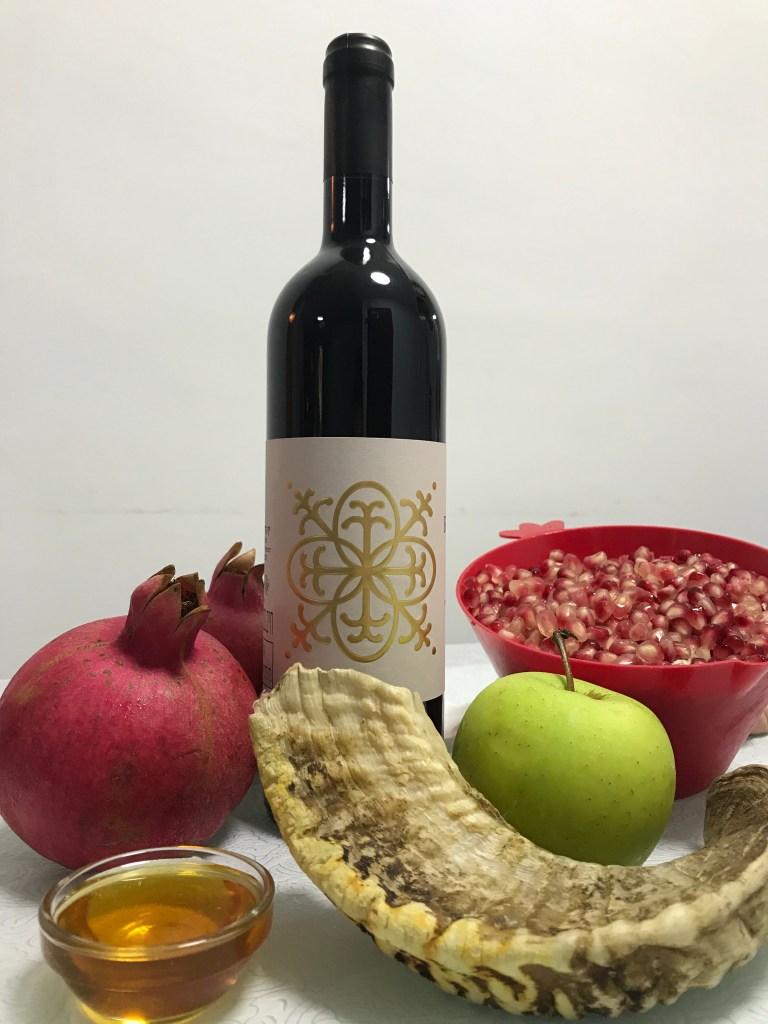
On Rosh HaShannah, let us make the effort to return to G-d: “Return to Me, and I will return to you, saith the L-RD of hosts” (Malachi 3:7, JPS). L’Shannah Tovah. May you have a sweet New Year with many blessings.

Shavuot 5783 Renewal

Let us stand at Sinai, figuratively speaking, to receive the commandments anew. Further consider that when Moshe entered “the thick cloud” (Exodus 19:9) on Sinai, he was called even further, he “drew near unto the thick darkness where G-d was” (Exodus 20:18, JPS 1917 Tanach). This serves as an example for us, in our quest to grow closer to G-d. He is found within the darkness of our lives, concealed within the hardships, trials and tribulations.

We may ask ourselves, when will the clouds part, and the light begin to shine in our lives? Perhaps, there will be a parting of the clouds, when we learn how to transform the challenges in our lives, by using them as opportunities to seek G-d, so that His presence, may comfort us during our nisyanos (troubles). On Shavuot, let us be strengthened by G-d’s presence, so that we may enter back into our lives, renewed with godly strength and vigor, as a result of our own personal Sinai experience.

Taanis Esther 5783

“‘Think not with thyself that thou shalt escape in the king’s house, more than all the Jews.  For if thou altogether holdest thy peace at this time, then will relief and deliverance arise to the Jews from another place, but thou and thy father’s house will perish; and who knoweth whether thou art not come to royal estate for such a time as this?’”  – Esther 4:13-14, JPS 1917 Tanach

“There is no man who has not his hour, and no thing that has not its place.” – Pirkei Avos 4:3

Esther petitioned King Ahasuerus to spare her people.  She, her maidens, and the Jewish people fasted for three days, before she approached the King.  She was risking her life, in doing so, because, no one could approach the king without permission.  Yet, she was emboldened to approach him, after fasting, with all of her people in support of her. 

Queen Esther was given her moment: “who knoweth whether thou art not come to royal estate for such a time as this?”  H’Shem arranges the remedy, before the sickness (Talmud). Esther was made queen, before Haman hatched his plan to eliminate the Jewish people. Thank G-d. And, may we also see hidden remedies revealed as miracles, speedily in our days.

Ultimately, we have H’Shem to seek as a refuge, both then and now; we should not take His shield of protection for granted; our refuge and fortress in Whom we trust (Psalm 91:2).  We should seek Him in all of our trials and tribulations, keeping in mind that He is the Source of our well-being. Especially, at this time to remember our brothers and sisters in peril, is an obligation and responsibility of K’lal Yisrael.

Hoshannah Rabbah 5783

B”H

shiur for Hoshannah Rabbah 5783

 “I stood between the L-RD and you at that time, to declare unto you the word of the L-RD.” – Deuteronomy 5:5, JPS 1917 Tanach

Of the esrog and lulav, it is written, “And ye shall take you on the first day the fruit of goodly trees, branches of palm-trees, and boughs of thick trees, and willows of the brook, and ye shall rejoice before the L-RD your G-d seven days” (Leviticus 23:40, JPS). Yet, when we make the beracha (blessing) before shaking the esrog and lulav, we only refer to the lulav. That is to say, out of the four species that are taken in one’s hands and shaken in all directions, we only say a blessing over the lulav.

The lulav represents our connection to heaven and earth. When we shake the lulav in the four directions, this represents north, south, east and west. When we shake the lulav and esrog above and below, these refer to heaven and earth. Why does the lulav represent our connection to heaven and earth? The lulav, symbolic of the spine, and the middah (character trait) of uprightness, or righteousness, may be understood as representative of Moshe, who was an intermediary between H’Shem and B’nei Yisrael. “I stood between the L-RD and you at that time, to declare unto you the word of the L-RD; for ye were afraid because of the fire, and went not up into the mount” (Deuteronomy 5:6, JPS). Thus, so too, the tzaddik olam, the Holy One of Israel.