
shiur: Shabbat Shuvah 5784

After Adam and Chava ate from the Tree of Knowledge, H’Shem called to Adam, “Where art thou?” (Genesis 3:9, JPS, 1917 Tanach). He responded, “I heard Thy voice in the garden, and I was afraid… so I hid myself” (Genesis 3:10, JPS 1917 Tanach). Adam’s shame compelled him to hide himself. Yet, G-d is all-knowing, as well as omnipresent (everywhere present). He surely knew where Adam was. Then, why did he ask, “Where are you?” The answer often given, is that G-d was challenging Adam’s own awareness, in effect, asking, “Where are you” in your relationship with me?

We learn in the Book of Isaiah that sin separates us from G-d (Isaiah 59:2). Adam and Chava (Eve) lost the oneness that they had with H’Shem; as a result of their transgression, they were expelled from Gan Eden, for having partaken from the tree of knowledge of good and evil. Up until that point, everything that they experienced in Gan Eden was in one accord with H’Shem, a nondual perspective. Yet, after eating from the tree that was forbidden to eat from, they became aware of good and evil. For this reason, even today, there is not only the external manifestation of good and evil in the world; there is also an admixture of good and bad in everything we do.

Like Adam and Chava, we cannot hide from H’Shem. He knows our thoughts, speech and behavior. Sin separates us from Him; the path to return is through actually admitting our transgressions, unlike the first couple, who circumvented G-d’s questions. At this time of year, during the Ten Days of Awe, and especially on Shabbat Shuvah (the Sabbath of Return), we are all asked, “Where are you?” G-d is prompting us to reveal our sins to Him. Yet, sometimes, our sins may be hidden from ourselves; in this case, we may ask Him to reveal our sins to us. Gemar chatimah tovah – a good final sealing.
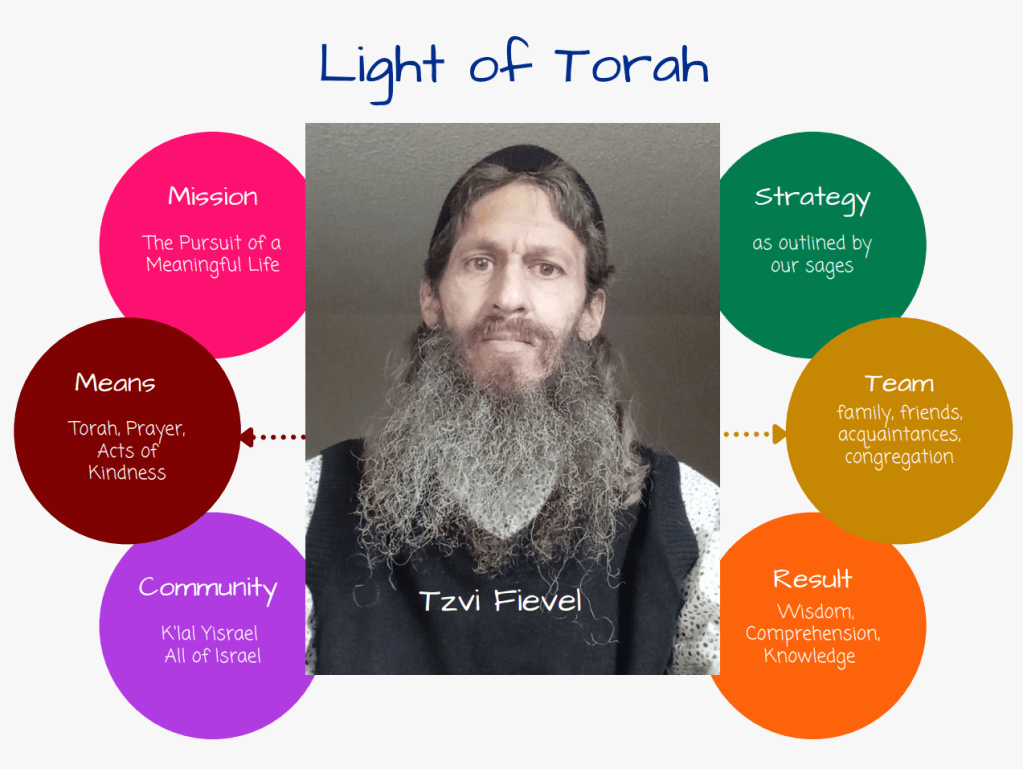
Soul Renewal: Changes Along the Journey of Life

“Some people will remain with us on our journey when we change; others will not.” – Tzvi Fievel Schnee

As I change, from time to time, over certain periods of my life, the adage that was made known to me, personally, by the founders of PD Seminars, at The Haven in British Columbia has become realized: I was told that some people would draw closer to me, and others would move further away from me. It is as if I can add this statement to my “facts of life” list, if indeed I had a facts of life list to begin with, written down somewhere in my personal journal. Yet, I never even though about beginning a list like that until now. The reason that I have even brought up this issue, is based upon my noticing that every once in a while, my Instagram account loses a follower: it is as if to say, that it is a fact of life for those who post on Instagram and other social media platforms; of course, this could apply to any other social media platform. Although I cannot be sure, I make the generalization with some certainty, despite any statistics; therefore, I hope that what I have mentioned in this specific post of mine, may be of some consolation to others.

The Inward Focus

“Look to yourselves,” we would like to say to others, when we see others casting blame upon people, institutions, and society at large. Yet, for the sake of our own benefit, we should not avoid “looking toward ourselves.” The Ten Days of Awe, for all intents and purposes, are a time of increased reflection upon our faults, errors, and sins, with the aim of bringing these into the light, and asking forgiveness. Additionally, on Yom Kippur, our atonement is sought through even more intense prayer, and H’Shem willing, bestowed upon us, so that we can begin the new year with the renewal of our souls, having been cleansed through a sincere teshuvah. Thus, our inward focus on improving ourselves, is rewarded by H’Shem, in acknowledgment of our efforts to change from within; and, having been relieved of our guilty conscience, we can experience the joy of Sukkot.

“Let us search and examine our ways, and turn back to the L-RD.”

– Lamentations 3:40, JPSN

Purim Shpiel 5782

Walking a Tightrope

To get from one place to another, walking a fine line along the way, is not only a task enacted by a tightrope walker. In fact, I imagine that I will not be the only one attempting a “balancing act” this Purim: balancing joy & sorrow, past & present, and religion & life. Perhaps, there is no need for me to explain, and you, dear reader, are already beginning to get an inkling of what I am about to say. Purim is quickly approaching; yet, my thoughts are preoccupied with a modern-day Purim story, wherein the archvillain is intent on destruction, despite the opposition.

Abraham Heschel advocated for a Judaism that is not wrapped up in its past glory, in spite of the prevailing circumstances of life. How can I celebrate Purim in a joyous manner, knowing that a real-life situation demands my attention, prayer, and support? To go along with Purim-as-usual would create a great disconnect between what is meant to be a living faith in touch with the challenges of life and the actual challenges that present themselves, despite the timing.

The war in Ukraine will not be put on hold for the celebration of Purim. This is the stark reality that many of the Jewish refugees who have managed to cross the border know. And the unfortunate ones, who for whatever reasons are still in Ukraine, sheltering in basements, or fighting to defend their country also know this all too well. The rejoicing in Shushan and the lands of Ahasuerus did not occur until after victory was procured for the Jewish people, who were previously threatened by the evil designs of Haman.

Today, rejoicing over this past victory will in all likelihood be diminished in light of the present reality. Whatever lessons we are able to glean from Purim, I would encourage that these be applied to our response to the events of today. Otherwise, as Heschel wrote, we risk ignoring “the crisis of today,” “because of the splendor of the past” (Heschel, G-d in Search of Man, ch.1).

Torah insight: Shoftim 5781

Deuteronomy 18:1

“The levitical priests, the whole tribe of Levi, shall have no territorial portion with Israel.”

Their presence was required at the Temple, even according to a designated rotation of shifts; moreover, they were scattered amongst the territories of the tribes, in order to attend to the spiritual needs of the entire people. Thus, in acknowledgment of their devotion to H’Shem, Maimonides speaks of the optional commitment that we may take upon ourselves, to become like unto “spiritual Levites.”