
Rosh HaShannah 5784

Our connection to H’Shem is envisioned as a rope, consisting of 613 strands, stretching from the highest aspect of our soul to the tetragrammaton. How can the tetragrammaton be understood in relationship to the actuality of G-d? The name of G-d depicted by the tetragrammaton, usually translated as L-RD, is not found until after Elokim (G-d) completed the creation of the heavens and the earth. “These are the generations of the heaven and of the earth when they were created, in the day that the L-RD G-d made earth and heaven” (Genesis 2:4, JPS 1917 Tanach).

According to Ramban, the final letter hei of YHVH, is associated with G-d’s hand, as per the verse, “For all these things hath my hand made” (Isaiah 66:2; commentary on Genesis 2:4, sefaria.org). This is the reason given, why kitvei kodesh (holy scripture) doesn’t mention the tetragrammaton until now. Specifically, it is revealed in the verse, wherein the Name first appears that…b’hibaram (when they were created; see above) can be read as two words, b’hei baram (created them with “the letter” hei).

So, when a sin occurs in someone’s life, whether with cognizance or not, the connection between one’s soul and H’Shem is diminished. In particular, this is symbolized as compromising the letter “yud” in H’Shem’s name, wherein the source of His divine flow stems from. Thereby, we only receive a lesser amount of divine flow to sustain our lives, if we sin. Another analogy, might be the closing off of a valve on a spicket, so that not as much water is flowing out as usual. We are diminished by our sinful ways, “You have separated between you and G-d” (Isaiah).

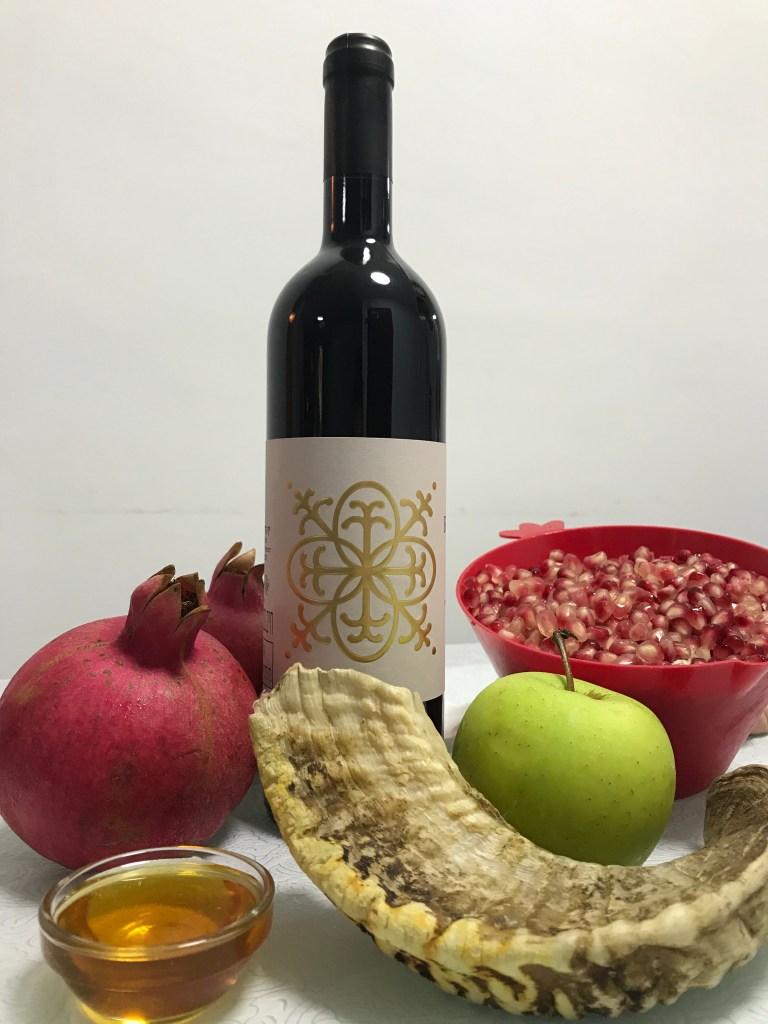
On Rosh HaShannah, let us make the effort to return to G-d: “Return to Me, and I will return to you, saith the L-RD of hosts” (Malachi 3:7, JPS). L’Shannah Tovah. May you have a sweet New Year with many blessings.
The Pardon

Elul Preparation: Day 27 – The Pardon

In regard to the Thirteen Attributes of Mercy, we should keep in mind, that when a sin is committed we may appeal to G-d’s mercy. When we receive G-d’s forgiveness, we are pardoned for our transgression. This is also encapsulated in the thirteen attributes, “forgiving iniquity and transgression and sin” (Exodus 34:7).

The question may be asked whether or not thorough G-d’s mercy, His forgiveness also includes atonement. The main requirement for atonement is repentance, or in Hebrew, teshuvah, a return to G-d. This is the start of reconciliation between G-d and man.

Yet, this is a two-way interaction, that through G-d’s mercy, we are forgiven. However, teshuvah requires a change of heart, and commitment to not only abstain from sin; rather also, to do good. Therefore, we must compel ourselves to undertake an effort to be proactive in endeavors that will benefit the soul. Several undertakings are recommended:

It is written elsewhere that the study of Torah and acts of loving-kindness (gemilut chasadim) atone for sin (Talmud, tractate Berachos). This may be understood as two ingredients in the overall “recipe” for teshuvah. So, that rather than the effects of sin lingering, or being prone to fall back into sin, these two endeavors should guard us against future sin.

Add to this the recital of the thirteen attributes, in an earnest appeal to H’Shem. In acknowledgment that we cannot stand on our own, we must keep these in mind. When we recite these during the High Holiday services, a sense of humility should be fostered in our hearts as we acknowledge our spiritual weakness, and His merciful response to us.

©2023 all rights reserved
based on Bnei Yissacher:
Elul – Ma’amar 2:7

Days of Favor

motzei Shabbos: Havdallah 2 Elul 5783

These days are days of favor and repentance. During the month of Elul, through the 10th of Tishrei, H’Shem bestows His favor upon us, so that our teshuvah will be heard and answered.

Thus, in acknowledgment that His Thirteen Attributes of Mercy, given to Moshe when He passed before him (Exodus 34:6), are exceptionally available to us, during these days, we may seek teshuvah with a sincere heart, in earnest expectation that we will be forgiven our sins.

Stand Before Him

“Ye are standing this day all of you before the L’rd your G’d.

– Deuteronomy 29:9, JPS

Moshe speaks to the generation of B’nei Yisrael (the Children of Israel) that will soon cross the Jordan River into the Promised Land, under the new leadership of Joshua. Moshe reassures the people that despite their transgressions in the wilderness, they are still “standing this day.” The Hebrew word used for stand in this verse is nitzavim, from the shoresh (root word) NZV, meaning to stand upright.

Moshe explains that they are gathered together, standing before H’Shem, “that thou shouldest enter (uvalaso) into the covenant of the L’RD thy G’d (Deuteronomy 29:11, JPS). The shoresh, AVR, meaning to enter, also means to cross over. The use of this word is apropos of B’nei Yisrael’s immanent crossing over the Jordan to Canaan. Figuratively speaking, they are crossing over as wanderers in the wilderness into the covenant. The proclamation given by Moses in this passage is a renewal of the covenant.

The Zohar relates the phrase, “Ye are standing this day” to Rosh HaShannah. When we stand before H’Shem on Rosh HaShannah, the Day of Judgment, when we are judged for the year, the books are opened, and we hope to be judged favorably, so that we may cross over into a good year. Let us search and try our ways, and return to the L’RD (Lamentations 3:40, JPS), so that we may stand before Him, and be inscribed in the Book of Life.

©2023 all rights reserved

Embracing Virtue

weekly Torah essay: parasha Nitzavim-Vayelech 5783

“See, I have placed before you this day life and good, death and evil.” – Deuteronomy 30:15

How can we freely choose, based on information that will permit us to make an informed decision? If we know right from wrong, then, we should have enough discernment to make the best decision for all who will be affected by that decision. Yet, if we lack discernment between right and wrong, and knowledge of good and evil, what precedent do we have to base our decisions upon? This is the tragedy of post-modern culture, that deprived itself of truth.

G-d is like a loving-parent, who sets clear boundaries and expectations with consequences for the child’s behavior. Out of the mouth of G-d proceeds the reward for doing good, and the judgments for wrongdoing (Lamentations 3:38). If we are unaware of G-d’s commitment to our moral condition, wherein He has made everything clear to us for our sake, then we are no better off than if we were in unchartered waters. 

If we attempt to navigate life without a map, what can our decisions be based upon, except for subjective notions of right and wrong, that might be vague and ill-defined? The truths established in scripture are time-tested, and will not be undone by the attempt to undermine Western civilization today.

This has been going on for centuries, ever since the French Revolution and the Enlightenment. And, now, the cultural revolution that has captured the institutions of society is wreaking havoc upon classical Western values. Yet, the value of scripture, and the qualities that are promoted by its teachings, such as truth, forgiveness, and compassion are even more important now than ever before. Our humanity is at risk if we fail to embrace the virtues that make us human.

Elul Preparation: Day 20

“The lion roars, who will not fear?” -Amos 3:8

During the month of Elul, H’Shem elicits awe from His people. The Bnei Yissacher further explains, that this verse specifically relates to this season, because the word for lion in Hebrew, aryeh, is an acronym for Elul, Rosh HaSHannah, Yom Kippur and Hoshanna (Rabbah).

Imagine a lion, the king of the beasts, roaring to awaken all who fear him. Yiras H’Shem, a sense of awe, respect and reverence toward G-d is awakened in us this month, as we approach Yom HaDin (the Day of Judgment) for the New Year.

Let us prepare in earnest this year, by searching our conscience, and strengthening our devotion to H’Shem. Whatever has faltered in our efforts over the past year, may they be revived. And, may we receive new life, springing up within us, as a result of our efforts.

©2023 all rights reserved
based on Bnei Yissacher:
Elul – Ma’amar 1:20

Searching for Meaning

Searching for Meaning in a World of Chaos

Challenging others with the truth, out of compassion, is a noble effort. Yet, the kind of truth that is able to stand on its own is different than a personal truth, that is more like an opinion. Moreover, often what people claim to believe is based upon their unsubstantiated feelings. Otherwise, their truth claims are nothing more than narratives that they are parroting from a news source, without actually investigating for themselves.

I myself am guilty, and have been so in my younger years to a greater degree of going along with the flow of ideas, stances, and positions that my friends held. I was not inclined to think for myself, nor reflect upon this, that or the other issue. Not until I began to strengthen my connection to G-d and His word, did I even begin to understand myself or others. It was as if I had been wavering in life, because I was disconnected from my Source.

If we neglect our connection to G-d, this may be as a consequence of our focus in life being elsewhere; especially, in the case of those who are caught up in a cause or ideology. Incidentally, perhaps, one of the reasons why the so-called “social justice movement” is flourishing is because participating in the movement gives some direction, meaning, and purpose to a person’s life.

I would contend that the void created by the diminishment of religious belief amongst this generation opens the doorway to the human yearning for meaning to be filled by some other means. Yet, the particularly vacuous nature of the Woke Movement, wherein nihilism abounds in the sense that meaning, purpose, and experience are subjective, will lead to the realization for some, that the soul is still undernourished. Hopefully, it will occur to mankind, when engulfed in such an empty set of pseudo-values, that there must be something more transcendent, that exists outside of our own subjectivity.

Elul Preparation: Day 19

What is the practical meaning of diligence? והיה עקב תשמעון “And, it shall come to pass, if you diligently observe…” (Deuteronomy 7:12). The word eikev literally means heel, implying the end of something. The Bnei Yissacher associates this verse with the end of the year on the Hebrew calendar, pertaining to the last month, Elul.

It is a time when returning to G-d, we should focus on being more diligent our understanding and observance of the commandments. Our diligence will manifest itself in different ways, depending on what is most important to each of us on the derech (path).

During the month of Elul our teshuvah is elicited from H’Shem. This is referred to as an arousal from Above (Heaven). Yet, it is up to us to remain committed to that initial motivation – the first positive inclinations that draw us toward a complete return to G-d in Elul.

©2023 all rights reserved
based on Bnei Yissacher:
Elul – Ma’amar 1:19

parasha Ki Savo 5783 – First Fruits

Motzei Shabbos Vort: parasha Ki Savo 5783

In consideration of a general theme, encapsulated in Bikurim declaration, there is a hint to this theme, in the names of the preceding and current parasha: Ki Seitzei (to go out), and Ki Savo (to arrive). G-d promised to Abraham that his descendants, who would be enslaved for four hundred years, would be redeemed, and brought out from a foreign country with great treasures. Eventually, his descendants would enter the Promised Land.

In consideration of the declaration recited when bringing the Bikurim (First Fruits) to Jerusalem, the words of the declaration expand upon this theme: they encapsulate the journey of Israel, from its humble origins, into a nation that became designated as G-d’s people (Exodus 6:7). We began as a small people, with 70 people, Jacob went down to Egypt, and over several generations the Israelites became a multitude. G-d redeemed us from slavery and brought us into Eretz Canaan.

When bringing the first fruits to the kohein in Jerusalem, each and every person recited a declaration in gratitude toward H’Shem for our redemption, and entry into the Promised Land. Today, we should keep in mind to always bring the first fruits of our endeavors to H’Shem. Whatever gifts, abilities, and talents H’Shem has given to us, we should use in our service to Him. And, let His Glory by reflected in our mitzvoth. Eventually, we will also be brought into the land of Olam Haba (the World to Come).

Shavua tov. Have a good week.

©2023 all rights reserved