
shiur: Shabbat Shuvah 5784

After Adam and Chava ate from the Tree of Knowledge, H’Shem called to Adam, “Where art thou?” (Genesis 3:9, JPS, 1917 Tanach). He responded, “I heard Thy voice in the garden, and I was afraid… so I hid myself” (Genesis 3:10, JPS 1917 Tanach). Adam’s shame compelled him to hide himself. Yet, G-d is all-knowing, as well as omnipresent (everywhere present). He surely knew where Adam was. Then, why did he ask, “Where are you?” The answer often given, is that G-d was challenging Adam’s own awareness, in effect, asking, “Where are you” in your relationship with me?

We learn in the Book of Isaiah that sin separates us from G-d (Isaiah 59:2). Adam and Chava (Eve) lost the oneness that they had with H’Shem; as a result of their transgression, they were expelled from Gan Eden, for having partaken from the tree of knowledge of good and evil. Up until that point, everything that they experienced in Gan Eden was in one accord with H’Shem, a nondual perspective. Yet, after eating from the tree that was forbidden to eat from, they became aware of good and evil. For this reason, even today, there is not only the external manifestation of good and evil in the world; there is also an admixture of good and bad in everything we do.

Like Adam and Chava, we cannot hide from H’Shem. He knows our thoughts, speech and behavior. Sin separates us from Him; the path to return is through actually admitting our transgressions, unlike the first couple, who circumvented G-d’s questions. At this time of year, during the Ten Days of Awe, and especially on Shabbat Shuvah (the Sabbath of Return), we are all asked, “Where are you?” G-d is prompting us to reveal our sins to Him. Yet, sometimes, our sins may be hidden from ourselves; in this case, we may ask Him to reveal our sins to us. Gemar chatimah tovah – a good final sealing.
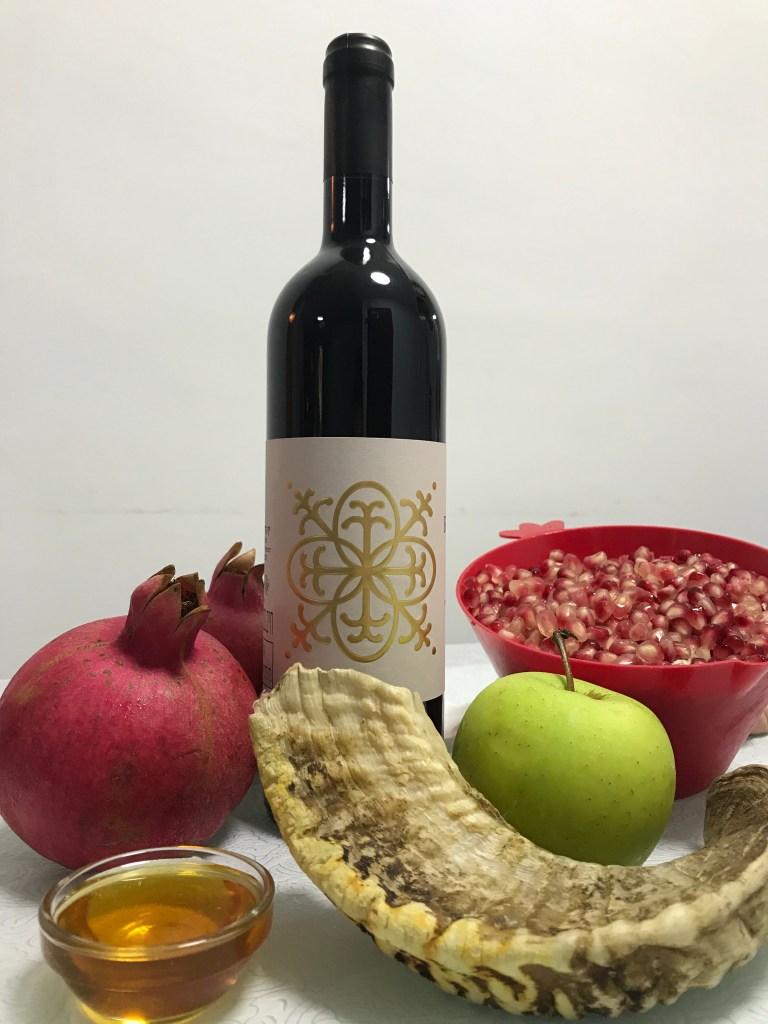
After the Festival

Rosh Hashanah shiur – Sanctification

“And now, Israel, what doth the L-RD thy G-d require of thee, but to fear the L-RD thy G-d, to walk in all His ways, and to love Him, and to serve the L-RD thy G-d with all thy hear and with all thy soul; to keep for thy good the commandments of the L-RD, and His statutes, which I command thee this day?” –  Deuteronomy 10:12-13, JPS 1917 Tanach

If we make an effort to sanctify ourselves from Below (Earth), according to our own efforts, H’Shem will sanctify us from Above (Heaven). Moreover, this also translates into our overall efforts in Olam Hazeh (This World), that will be rewarded in Olam Haba (The World-to-Come). This would include the sanctification of speech.

For myself, the nature, timing, and quality of my words need much refining. As much as I may think that I’m cautious about my speech, as a boundaried individual, I also am able to see where I fall short of appropriate speech. Namely, the many different kinds of lashon hara are a reminder to me, that I need to make an effort to improve in this department. Which serves as a segue to another important point.

Rosh HaShanah should ideally be a serious day of focus on one’s thought, speech, and action, while remaining free from chatter, and idle words, in order to have one’s thoughts absorbed with the meaning of the holiday. However, this task becomes even more challenging at seudah (lunch) after the morning service. I found myself reverting back to the same types of inappropriate speech I have been trying to root out.

Isn’t this the nature of festivities, when there is wine and good food? Yet, regardless, I am still responsible for my own speech and behavior. The only positive result of my realizing that I spoke lashon hara twice during seudah, is that my faults compelled me to begin reading the sefer of Chofetz Chaim on Lashon Hara. And, lo and behold, the book is arranged to study these laws, beginning on Tishrei 1.

So, here I am. Hineni. Like all of us, I am given another chance to improve. May this only be the beginning of renewal for all of K’lal Yisrael. For the sake of our own benefit (Deuteronomy 10:13), may we endeavor to keep on track by following the commandments, especially those wherein we need to improve.

Gemar chatimah tovah – a good final sealing.

Rosh HaShannah 5784

Rosh HaShannah is a time of renewal. Through teshuvah (repentance) we prepare ourselves to face H’Shem: Avinu Malkeinu (Our Father, Our King) on the Day of Judgment for the New Year. Through proper reflection, and rooting out our sins well in advance of that day, we hope to begin the new year with the resolve to start anew.

Rosh HaShannah is considered to be a day of judgment for the new year. We would like to be judged favorably, so we make an accounting of the soul (heshbnon hanefesh), in order that our conscience will permit ourselves to stand before the King. According to the Zohar, “’You stand this day all of you before the L-RD your G-d’” (Deuteronomy 30:9) refers to Rosh HaShannah, when we stand before H’Shem in judgment for the New Year.

When we examine our conscience, we may be brought to a place of moral compunction as a result of guilt and remorse. During the Ten Days of Repentance, otherwise known as the Days of Awe, we continue to search our souls for the flaws that need to be brought into the light . During that time, any judgments against us for the year may be diminished through our efforts at “teshuvah (repentance), tefillah (prayer), and tsedokah (charity),” that “avert the severity of the decree,” for the decrees are not sealed until Yom Kippur.

The Pardon

Elul Preparation: Day 27 – The Pardon

In regard to the Thirteen Attributes of Mercy, we should keep in mind, that when a sin is committed we may appeal to G-d’s mercy. When we receive G-d’s forgiveness, we are pardoned for our transgression. This is also encapsulated in the thirteen attributes, “forgiving iniquity and transgression and sin” (Exodus 34:7).

The question may be asked whether or not thorough G-d’s mercy, His forgiveness also includes atonement. The main requirement for atonement is repentance, or in Hebrew, teshuvah, a return to G-d. This is the start of reconciliation between G-d and man.

Yet, this is a two-way interaction, that through G-d’s mercy, we are forgiven. However, teshuvah requires a change of heart, and commitment to not only abstain from sin; rather also, to do good. Therefore, we must compel ourselves to undertake an effort to be proactive in endeavors that will benefit the soul. Several undertakings are recommended:

It is written elsewhere that the study of Torah and acts of loving-kindness (gemilut chasadim) atone for sin (Talmud, tractate Berachos). This may be understood as two ingredients in the overall “recipe” for teshuvah. So, that rather than the effects of sin lingering, or being prone to fall back into sin, these two endeavors should guard us against future sin.

Add to this the recital of the thirteen attributes, in an earnest appeal to H’Shem. In acknowledgment that we cannot stand on our own, we must keep these in mind. When we recite these during the High Holiday services, a sense of humility should be fostered in our hearts as we acknowledge our spiritual weakness, and His merciful response to us.

©2023 all rights reserved
based on Bnei Yissacher:
Elul – Ma’amar 2:7

Days of Favor

motzei Shabbos: Havdallah 2 Elul 5783

These days are days of favor and repentance. During the month of Elul, through the 10th of Tishrei, H’Shem bestows His favor upon us, so that our teshuvah will be heard and answered.

Thus, in acknowledgment that His Thirteen Attributes of Mercy, given to Moshe when He passed before him (Exodus 34:6), are exceptionally available to us, during these days, we may seek teshuvah with a sincere heart, in earnest expectation that we will be forgiven our sins.

Embracing Virtue

weekly Torah essay: parasha Nitzavim-Vayelech 5783

“See, I have placed before you this day life and good, death and evil.” – Deuteronomy 30:15

How can we freely choose, based on information that will permit us to make an informed decision? If we know right from wrong, then, we should have enough discernment to make the best decision for all who will be affected by that decision. Yet, if we lack discernment between right and wrong, and knowledge of good and evil, what precedent do we have to base our decisions upon? This is the tragedy of post-modern culture, that deprived itself of truth.

G-d is like a loving-parent, who sets clear boundaries and expectations with consequences for the child’s behavior. Out of the mouth of G-d proceeds the reward for doing good, and the judgments for wrongdoing (Lamentations 3:38). If we are unaware of G-d’s commitment to our moral condition, wherein He has made everything clear to us for our sake, then we are no better off than if we were in unchartered waters. 

If we attempt to navigate life without a map, what can our decisions be based upon, except for subjective notions of right and wrong, that might be vague and ill-defined? The truths established in scripture are time-tested, and will not be undone by the attempt to undermine Western civilization today.

This has been going on for centuries, ever since the French Revolution and the Enlightenment. And, now, the cultural revolution that has captured the institutions of society is wreaking havoc upon classical Western values. Yet, the value of scripture, and the qualities that are promoted by its teachings, such as truth, forgiveness, and compassion are even more important now than ever before. Our humanity is at risk if we fail to embrace the virtues that make us human.

parasha Ki Savo 5783 – First Fruits

Motzei Shabbos Vort: parasha Ki Savo 5783

In consideration of a general theme, encapsulated in Bikurim declaration, there is a hint to this theme, in the names of the preceding and current parasha: Ki Seitzei (to go out), and Ki Savo (to arrive). G-d promised to Abraham that his descendants, who would be enslaved for four hundred years, would be redeemed, and brought out from a foreign country with great treasures. Eventually, his descendants would enter the Promised Land.

In consideration of the declaration recited when bringing the Bikurim (First Fruits) to Jerusalem, the words of the declaration expand upon this theme: they encapsulate the journey of Israel, from its humble origins, into a nation that became designated as G-d’s people (Exodus 6:7). We began as a small people, with 70 people, Jacob went down to Egypt, and over several generations the Israelites became a multitude. G-d redeemed us from slavery and brought us into Eretz Canaan.

When bringing the first fruits to the kohein in Jerusalem, each and every person recited a declaration in gratitude toward H’Shem for our redemption, and entry into the Promised Land. Today, we should keep in mind to always bring the first fruits of our endeavors to H’Shem. Whatever gifts, abilities, and talents H’Shem has given to us, we should use in our service to Him. And, let His Glory by reflected in our mitzvoth. Eventually, we will also be brought into the land of Olam Haba (the World to Come).

Shavua tov. Have a good week.

©2023 all rights reserved

parasha Ki Seitzei 5783

According to the Rashi translation of Shir HaShirim, that is recited erev Shabbos, by the pious, Israel asks G-d, where He will graze His flock. Elokim responds, that we should follow in the footsteps of the sheep, our forefathers, who walked in the ways of H’Shem. Yet, we have strayed, is this not so? Or am I the only who realizes this from the perspective of my own experience, judging myself first?

As a people, we have strayed, for we are K’lal Yisrael, and no part of the whole can claim redemption from the rest of the whole, as if G-d favors the righteous and excludes the rest. Rather, He calls us all to return to Him, from whatever level we currently stand upon the ladder of inspiration and deveykus (attachment to G-d).

In this week’s parasha (Torah portion), we learn about the woman who is taken captive during a battle against Israel’s enemy. This woman is treated with great respect, and is permitted to mourn for her parents, her people, and her previous life, prior to being taken captive.

She represents the neshamah (fem,. soul), of a penitent that G-d takes captive to draw that soul to Himself. Israel, personified in Shir Hashirim, is self-aware of her past deeds that were not pleasing to G-d. She marvels at G-d’s mercy, how He responds to her in a compassionate manner, drawing her toward Himself anyway.

The month of Elul is the time when the King is in the field, figurative language for G-d’s close proximity to us during the month of Elul that precedes Yom HaDin, the Day of Judgment.

©2023 all rights reserved

Holy Discomfort

If the animal soul is neglected, as required to follow the pursuits of the godly soul, how will this affect the psyche? The soul may be nourished by the righteousness that ensues on the derech (path), when it applies itself to study and prayer. Yet, the resistance from the animal soul may manifest in unpleasant feelings, because it is being deprived of its way upon the person. So, there is the soul, with all of its attributes, divided into the godly soul, and animal soul. Yet, these two are part of the whole. Therefore, both affect the person, within the framework of mind, body, and spirt.

In a sense, the distaste that the animal soul has for things spiritual may show up as negative emotions, that wear upon the person. Is this a sign that something is wrong with the person? On the contrary, it is like the feelings and discomfort we have when fasting on Yom Kippur. We are fasting for the sake of our soul; yet, the accompanying unpleasantness of the fast are a sign that it is working, like purifying us from the dross, until we are refined.

So even that well know adage from the secular world of exercise applies: no pain, no gain. If G-d made all things holy, wholly pleasant to the soul, without any resistance from the yetzer hara (stemming from the animal soul), then it would be easy to do good, and what reward could there be for that? Rather, because of the challenges and difficulties that oppose our endeavors to follow the path of righteousness, we are rewarded, both in this life, and the World to Come.